



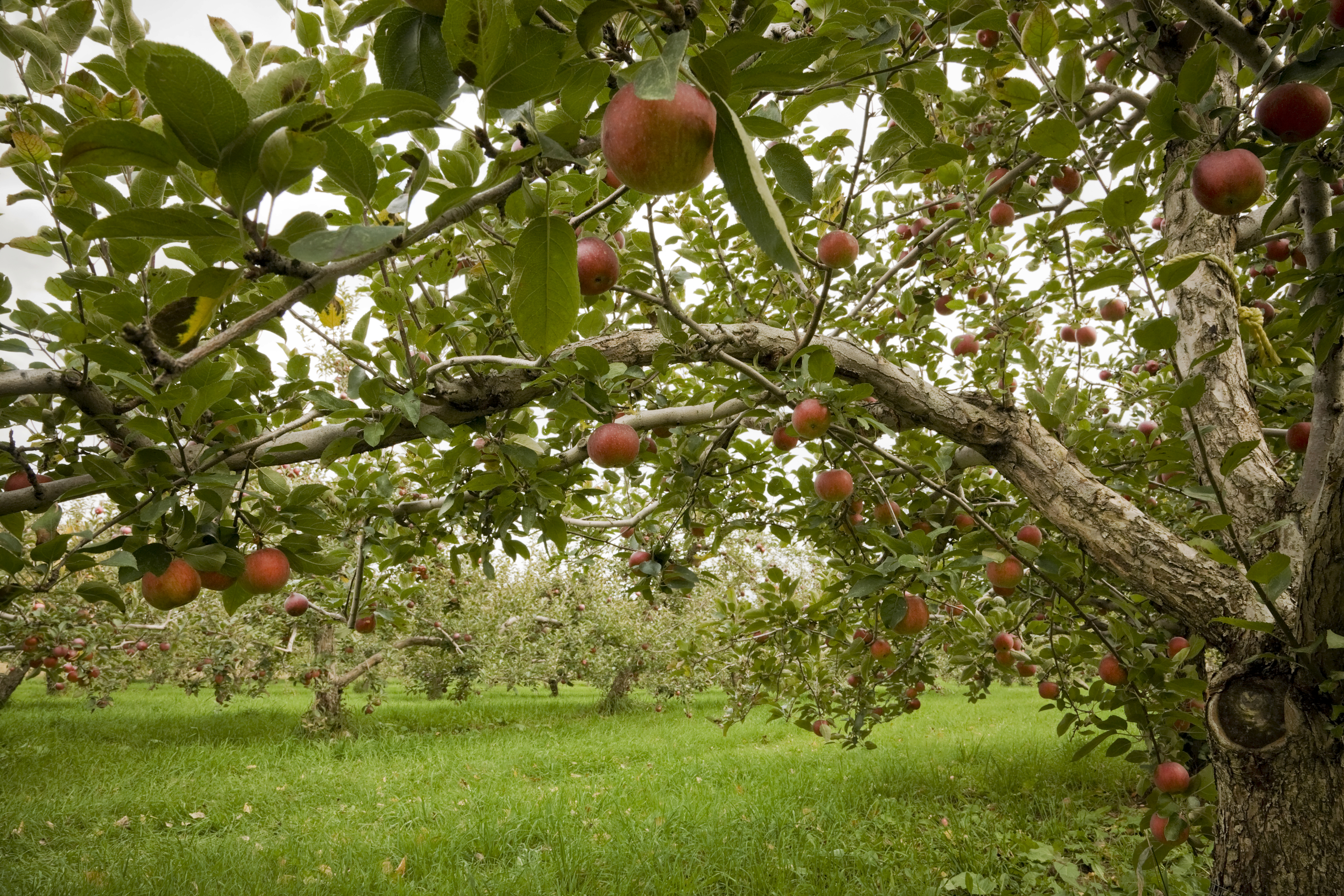
 Sunrise Orchards and Roger’s Orchards in Connecticut take great pride in how their apples are grown. Both orchards are certified as Eco Apples™ and have to adhere to strict growing practices in order to receive this certification. The program focuses on the quality of the soil the apples are grown on, and keeping beneficial insects within the environment. As part of this process having as much information about what is going on in the orchard and the plants surrounding the area is essential. By monitoring insect populations, growing conditions, and other factors that are important to the growing process growers can determine whether it is necessary to treat against any unwanted fungus or pest that may be harmful to the apple crop. The Eco Apple™ certification is not given out to every orchard, every year. In order to receive the certification the orchards have to undergo a review by the IPM Institute of North America, to ensure that the growing conditions have been upheld for the year.
As I mentioned earlier I really love ciders. Every once in a while I may indulge in a hard cider (my favorite is Woodchuck!), but the typical nonalcoholic fare is my true favorite. There is nothing better than a beautiful fall day with a glass of apple cider. I’ve recently been experimenting with warming apple cider for those days when the first fingers of winter reach into the air. I’ve found warming up apple cider and adding a pinch of cinnamon does the trick!
When it comes to apple baking I love the classics. There is nothing better in my mind then a warm slice of apple pie (or a whole apple pie whatever floats your boat). My best friend has recently been trying to teach me how to bake and we decided to start big with the pie. We used this recipe for an apple pie from scratch, but a pre-made or gluten free crust could easily be substituted!
How do you enjoy apples in the fall? Share your apple creations on Instagram with #PriceChopper and #Market32! Written by: Ellie Wilson, MS, RDN
Black Horse Farm
Coxsackie, NY
Farmers – Lloyd Zimmerman and Family
Sunrise Orchards and Roger’s Orchards in Connecticut take great pride in how their apples are grown. Both orchards are certified as Eco Apples™ and have to adhere to strict growing practices in order to receive this certification. The program focuses on the quality of the soil the apples are grown on, and keeping beneficial insects within the environment. As part of this process having as much information about what is going on in the orchard and the plants surrounding the area is essential. By monitoring insect populations, growing conditions, and other factors that are important to the growing process growers can determine whether it is necessary to treat against any unwanted fungus or pest that may be harmful to the apple crop. The Eco Apple™ certification is not given out to every orchard, every year. In order to receive the certification the orchards have to undergo a review by the IPM Institute of North America, to ensure that the growing conditions have been upheld for the year.
As I mentioned earlier I really love ciders. Every once in a while I may indulge in a hard cider (my favorite is Woodchuck!), but the typical nonalcoholic fare is my true favorite. There is nothing better than a beautiful fall day with a glass of apple cider. I’ve recently been experimenting with warming apple cider for those days when the first fingers of winter reach into the air. I’ve found warming up apple cider and adding a pinch of cinnamon does the trick!
When it comes to apple baking I love the classics. There is nothing better in my mind then a warm slice of apple pie (or a whole apple pie whatever floats your boat). My best friend has recently been trying to teach me how to bake and we decided to start big with the pie. We used this recipe for an apple pie from scratch, but a pre-made or gluten free crust could easily be substituted!
How do you enjoy apples in the fall? Share your apple creations on Instagram with #PriceChopper and #Market32! Written by: Ellie Wilson, MS, RDN
Black Horse Farm
Coxsackie, NY
Farmers – Lloyd Zimmerman and Family
 Lloyd Zimmerman did not grow up farming – he was a NYC kid, child of two college professors, but he became interested in agriculture because his family had a summer home in the country. At 21, he graduated with a degree in agricultural economics, and purchased an old farm in Coeyman’s Hollow with the help of his parents. He farmed part-time, while working for New York State, eventually working in the Governor’s office on agriculture and civil defense. In 1964, the farm started making money and he “retired” from state service. He and his wife raised lamb, initially, and one of his first customers was Central Markets. After Vietnam, market pressures moved him into vegetables, and he hasn’t looked back.
His favorite part of farming is watching crops grow, and working with the broad group of people in the produce business. While he did not grow up farming, his children did, and two daughters, Chellie Apa and Lisa Buhrmaster, now run major aspects of the operation. They employ on average about 55 people – this is a diverse and dynamic business. At this time of year, his day starts at 4:30 AM, but has started as early as 2:30, which some of their team starts still because they are packing trucks. That work is essential to bringing in those fresh items – time between field and fork is important.
Lloyd chooses his seeds based on science and savvy – sweet corn and tomatoes should have a good, sweet taste, so they start there, and then look at some of the scientific specifications of a product, like the measurement of sweetness, called degrees Brix. They work with the seed salesman to locate varieties of new items that have a good reputation and production.
There are very strict standards and procedures in place around harvest and packing – cleanliness is king, and Black Horse Farm is GAP certified. GAP stands for Good
Lloyd Zimmerman did not grow up farming – he was a NYC kid, child of two college professors, but he became interested in agriculture because his family had a summer home in the country. At 21, he graduated with a degree in agricultural economics, and purchased an old farm in Coeyman’s Hollow with the help of his parents. He farmed part-time, while working for New York State, eventually working in the Governor’s office on agriculture and civil defense. In 1964, the farm started making money and he “retired” from state service. He and his wife raised lamb, initially, and one of his first customers was Central Markets. After Vietnam, market pressures moved him into vegetables, and he hasn’t looked back.
His favorite part of farming is watching crops grow, and working with the broad group of people in the produce business. While he did not grow up farming, his children did, and two daughters, Chellie Apa and Lisa Buhrmaster, now run major aspects of the operation. They employ on average about 55 people – this is a diverse and dynamic business. At this time of year, his day starts at 4:30 AM, but has started as early as 2:30, which some of their team starts still because they are packing trucks. That work is essential to bringing in those fresh items – time between field and fork is important.
Lloyd chooses his seeds based on science and savvy – sweet corn and tomatoes should have a good, sweet taste, so they start there, and then look at some of the scientific specifications of a product, like the measurement of sweetness, called degrees Brix. They work with the seed salesman to locate varieties of new items that have a good reputation and production.
There are very strict standards and procedures in place around harvest and packing – cleanliness is king, and Black Horse Farm is GAP certified. GAP stands for Good 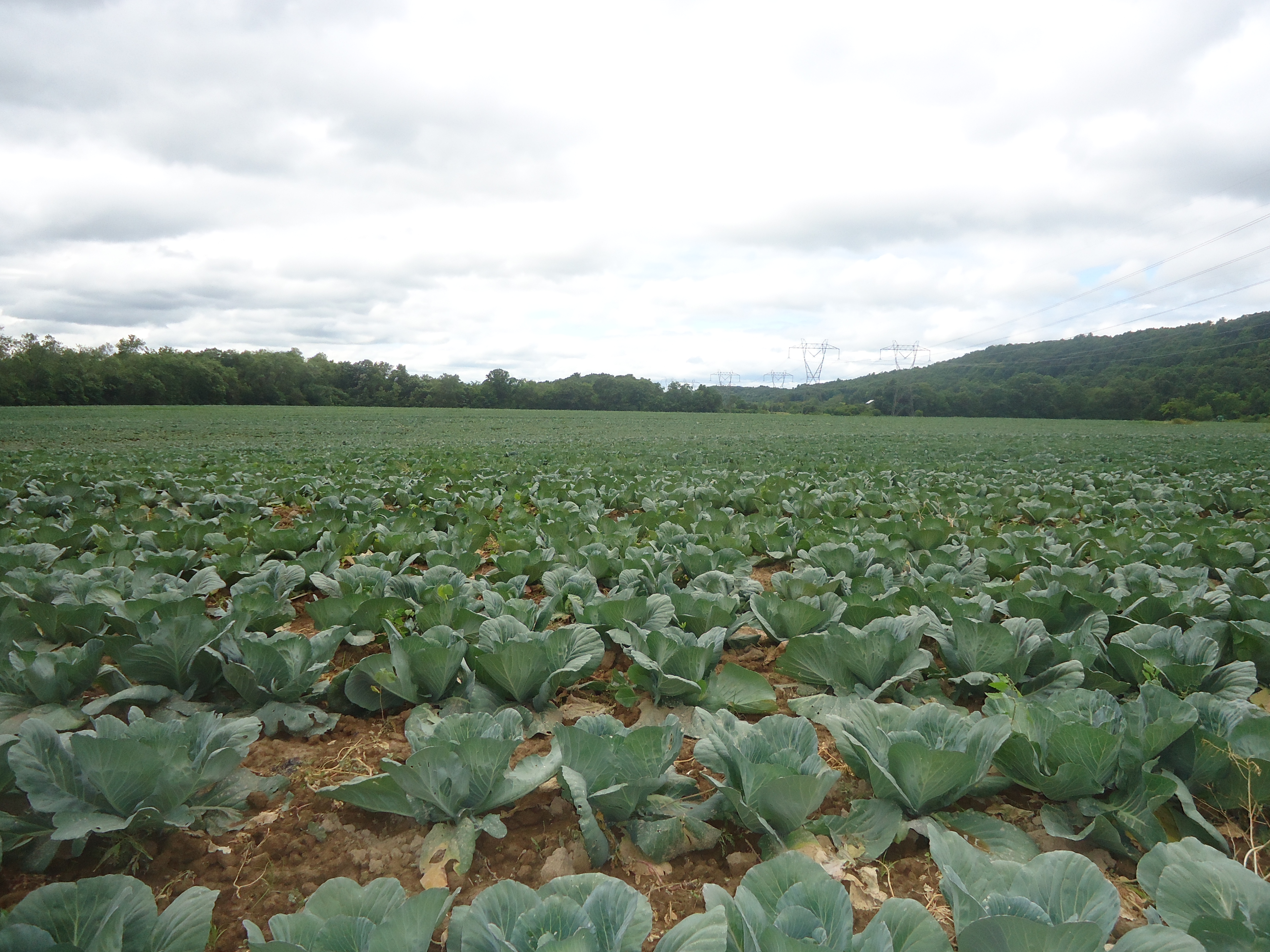 Agricultural Practices, and it is a system of practices and record keeping that helps farmers ensure food safety is being managed. Price Chopper only works with farms that are GAP certified, as part of our commitment to ensuring our customers can be confident that they really are getting the best quality fruits and vegetables from us. Attention to refrigeration, hand washing and other aspects of safe food production are part and parcel of their work. They also sort their produce with those less fortunate in mind, and work with local food pantries to supply good food that is not premium grade.
There are some game changers on the horizon – Lloyd sees two that he thinks will impact farming in enormous ways. The first is the use of drones – he has been wishing for these for over 20 years, and is excited that they are coming to farming. The other is the advanced education farmers are starting to benefit from, as children return to their family farms with degrees in agronomy, veterinary science and business.
I really enjoyed speaking with Lloyd – his gravelly voice ebbed and flowed as we spoke, full of passion and humor and knowledge. With helping people eat more fruits and vegetables so central to my role, I asked what he thought would help people do a better job, and he thought helping people understand what local produce is and who the farmers are is a great start. We completely bonded over favorites – tomatoes, on a delicious BLT sandwich with a malted milk (I make mine with the Price Chopper pre-cooked bacon – slices are nice and thin, great for sandwiches). So, please take my advice – take advantage of the season and enjoy the bounty Price Chopper brings you from farmers like Lloyd Zimmerman – sweet summer!
Check out this recipe for Lemon & Garlic Glazed Corn on the Cob!
Agricultural Practices, and it is a system of practices and record keeping that helps farmers ensure food safety is being managed. Price Chopper only works with farms that are GAP certified, as part of our commitment to ensuring our customers can be confident that they really are getting the best quality fruits and vegetables from us. Attention to refrigeration, hand washing and other aspects of safe food production are part and parcel of their work. They also sort their produce with those less fortunate in mind, and work with local food pantries to supply good food that is not premium grade.
There are some game changers on the horizon – Lloyd sees two that he thinks will impact farming in enormous ways. The first is the use of drones – he has been wishing for these for over 20 years, and is excited that they are coming to farming. The other is the advanced education farmers are starting to benefit from, as children return to their family farms with degrees in agronomy, veterinary science and business.
I really enjoyed speaking with Lloyd – his gravelly voice ebbed and flowed as we spoke, full of passion and humor and knowledge. With helping people eat more fruits and vegetables so central to my role, I asked what he thought would help people do a better job, and he thought helping people understand what local produce is and who the farmers are is a great start. We completely bonded over favorites – tomatoes, on a delicious BLT sandwich with a malted milk (I make mine with the Price Chopper pre-cooked bacon – slices are nice and thin, great for sandwiches). So, please take my advice – take advantage of the season and enjoy the bounty Price Chopper brings you from farmers like Lloyd Zimmerman – sweet summer!
Check out this recipe for Lemon & Garlic Glazed Corn on the Cob! 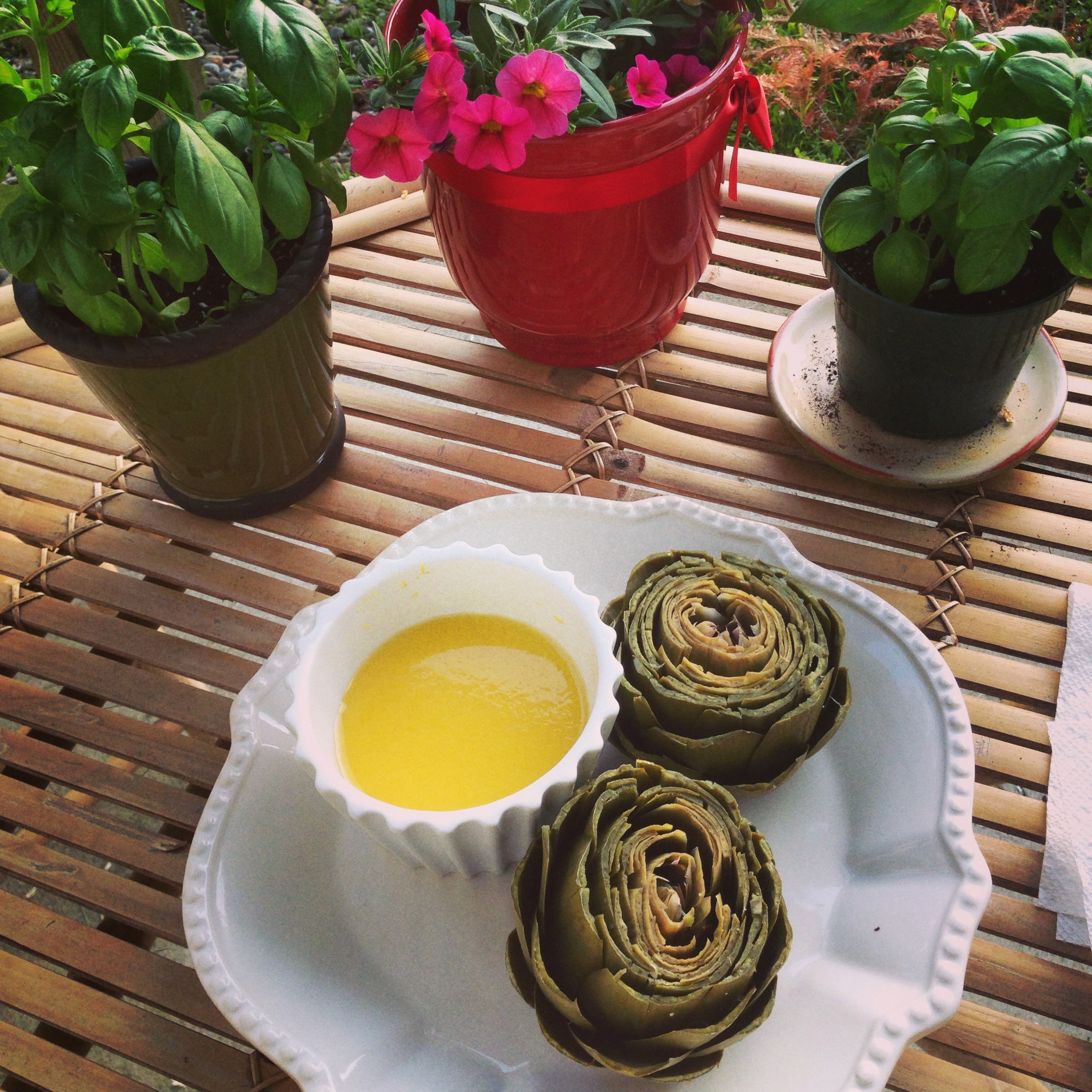
Steamed Artichokes with Butter
 Did you know these artichokes are never grown from seeds? They grow only from the same root stock that has been passed down to each family of farmers for more than 90 years. Over 99% of all artichokes grown in the US come from California. Additionally, 95% of the heirloom artichoke comes specifically from the region of Castroville, California. Castroville, the artichoke capital of the world, is located right along the Pacific Ocean’s Monterey Bay and is home to the annual Artichoke Festival.
Artichokes are a Nutritional Powerhouse for Fiber and Antioxidants:
Did you know these artichokes are never grown from seeds? They grow only from the same root stock that has been passed down to each family of farmers for more than 90 years. Over 99% of all artichokes grown in the US come from California. Additionally, 95% of the heirloom artichoke comes specifically from the region of Castroville, California. Castroville, the artichoke capital of the world, is located right along the Pacific Ocean’s Monterey Bay and is home to the annual Artichoke Festival.
Artichokes are a Nutritional Powerhouse for Fiber and Antioxidants:
- FIBER: one Artichoke (120 grams) is an “excellent source” (providing 10.3 grams) of dietary fiber, meaning — according to the Food and Drug Administration —Artichokes provide 20 percent or more of the Daily Value of fiber.
- VITAMIN C-ANTIOXIDANTS: A study from researchers at the United States Department of Agriculture found that Artichokes ranked seventh in total antioxidant capacity per serving out of more than 1000 common foods, such as fruits, vegetables, cereals, nuts, etc.
- The size of an artichoke is dictated by where it grows on the artichoke plant. Jumbo, Large size artichokes grow at the top of the plant. Small, baby sized artichokes grow at the bottom of the plant.
- Any size artichoke: Don’t forget to rinse! Before cooking artichokes, rinse and brush off under cold water. This will remove the natural thin film an Artichoke produces while growing that can give the choke a bitter taste.
- Baby Size Artichoke: To prepare for cooking: Snap off the outer layer of petals until you reach the pale, yellow green layer of petals. Then trim off stem and remove the dark green top tip of petals that will also cause a bitter taste if not removed.
- Long stem Artichokes: The stem is an extension of the heart. To prep: Peel the long stem of the Artichoke with a vegetable peeler until you reach the pale green flesh inside.
- Cut the stems off the artichokes
- Cut off approximately the top 1/2 inch of the artichoke
- Trim the tips off of all petals with kitchen scissors
- Bang the cut side on the edge of a table to open up the artichoke petals
- Boil water, adding a few lemon slices & the pealed stems of the artichokes
- Place face down on steamer basket and steam until underside of leaves are tender
- Peel off petals and dip in butter (or your sauce of choice) & enjoy!
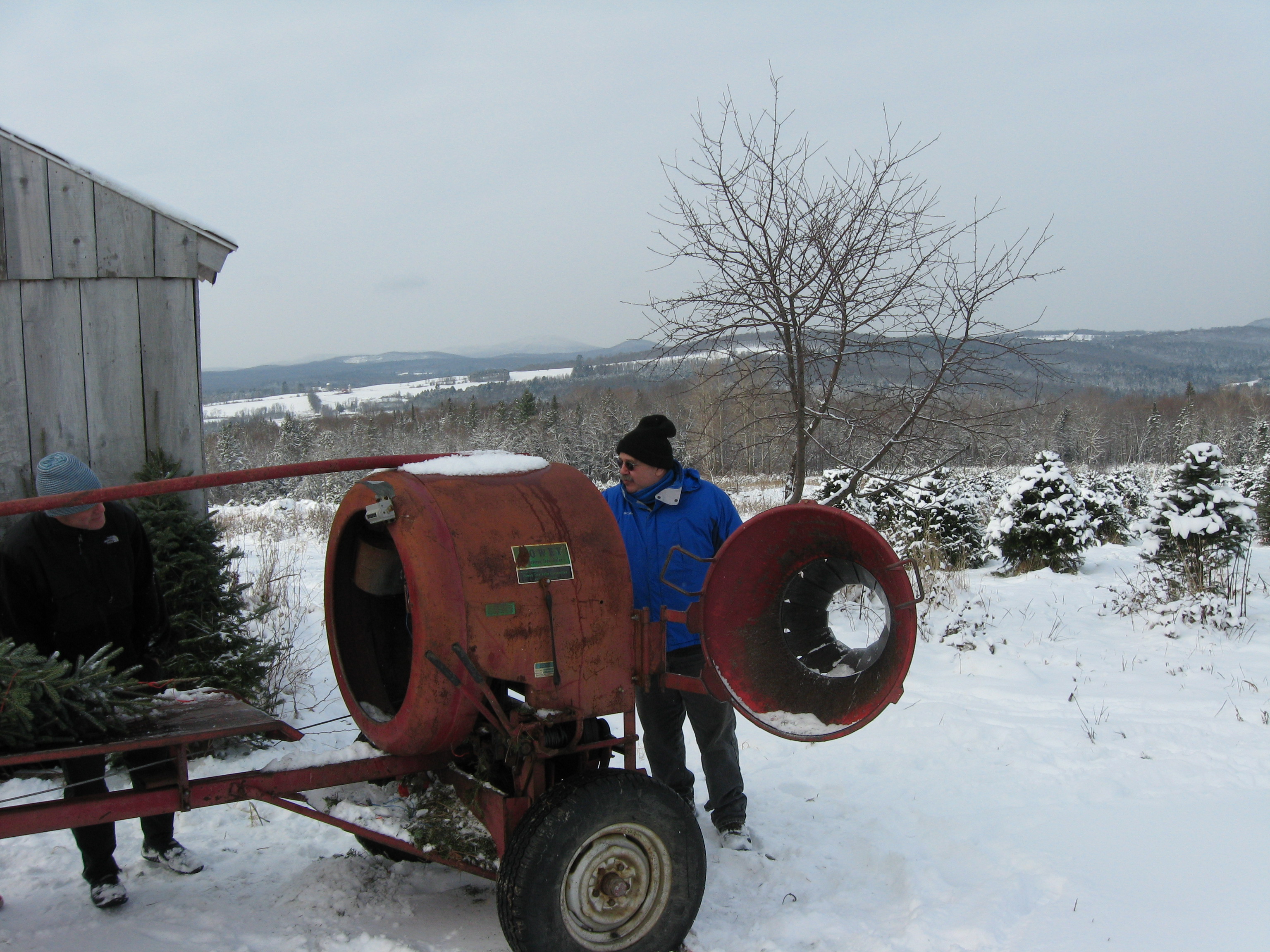 It’s the holiday season, and many of our local growers are enjoying a well deserved break from the busy growing season. However, one of our growers, Richard Hourihan in Cabot, Vermont, is still growing strong! Richard’s farm is unique. He delivers fresh-picked produce in the summer and fall, and then delivers fresh-picked fir trees to us once the holiday season comes around.
Written by: Tyler Blance- Produce Merchandising
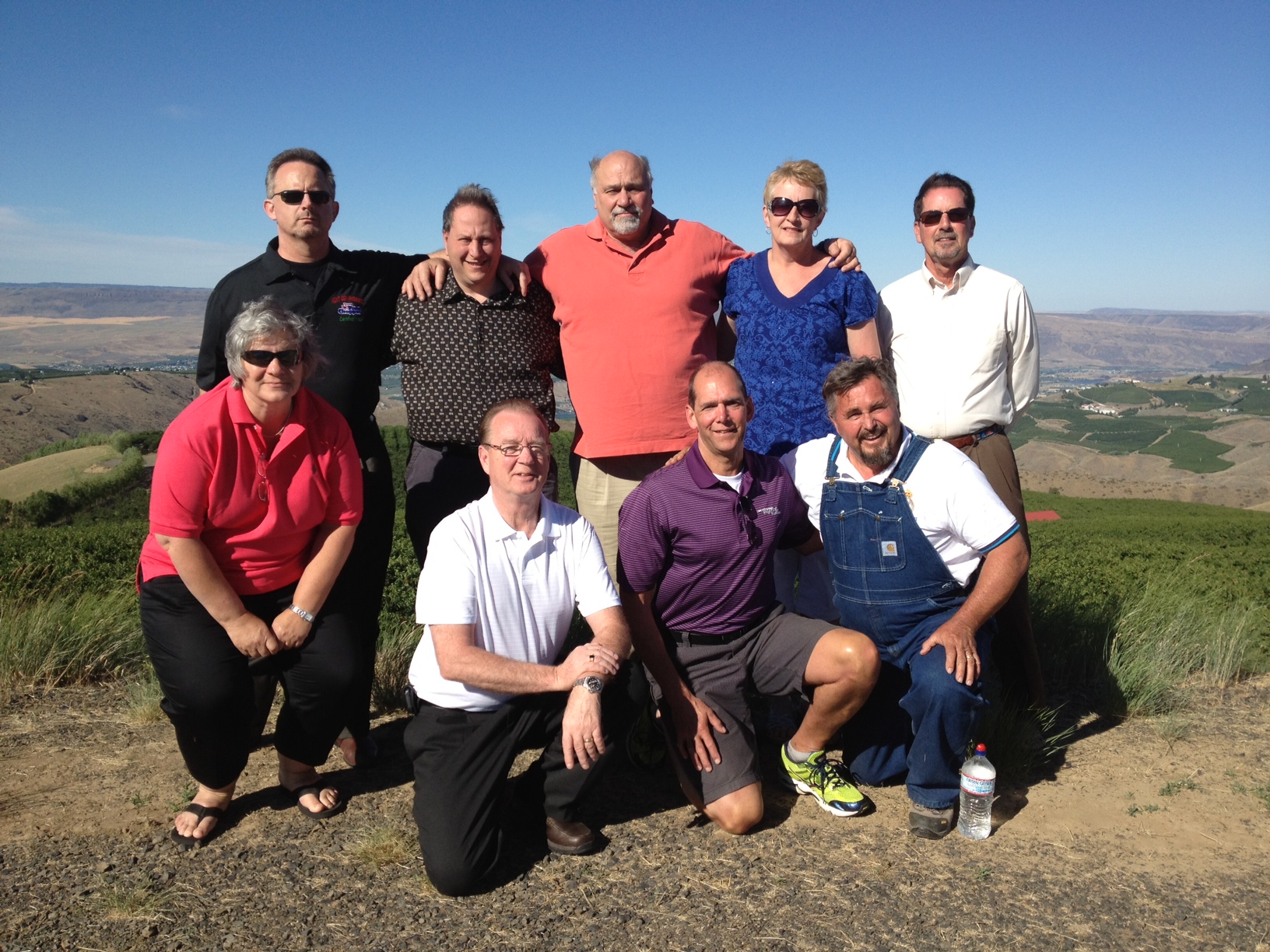
Cherries are a classic fruit that everyone is familiar with. When you’re shopping at your local Price Chopper this time of year, chances are you’ll find a freshly-stocked and vibrant cherry display. I’m here to tell you a little story and give you some information on those cherries.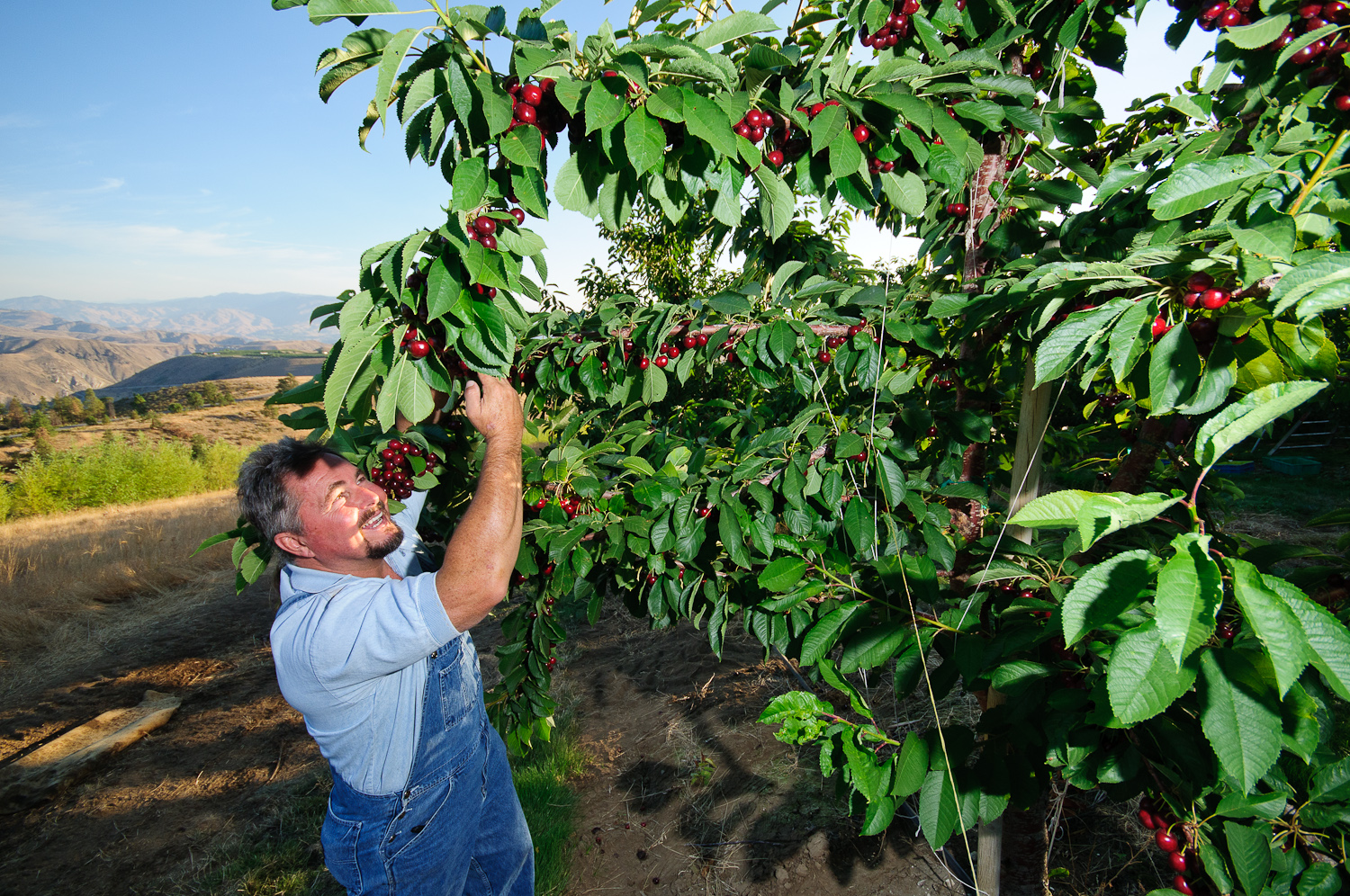 We get our cherries from the Mathison family in Washington at Stemilt Growers- a family that was a pioneer in the cherry industry. Stemilt is a Native American term that means “coming from the mountains”- Pretty cool! Last week, a group of teammates from our Produce team took a trip out to visit the folks at Stemilt, located on the beautiful Stemilt Hill in Washington, to take a tour of the operation. They were very impressed- the Mathisons have been farming the same land since 1893! Kyle Mathison (pictured in overalls in the group photo) is a 4th generation cherry farmer whose passion in life is growing cherries. Kyle’s cherry farming passion helps to create the beautiful, luscious cherries that you can find in your local Price Chopper!
 On the nutritional end, cherries make a great snack. Cherries are high in antioxidants and contain melatonin, which helps you maintain optimum brain function. They’re low in fat and calories, cholesterol and sodium free, and on top of all that: they’re a great source of vitamin C and potassium.
So there you have it! Next time you’re journeying through our produce department, you’ll know a little more about those beautiful cherries that catch your eye. There are lots of great recipes for cherries, but today I’d like to offer a simple, delicious way to create the classic cherry pie. When 80’s hair band Warrant sang that oh-so-catchy “She’s My Cherry Pie,” they may have been referring to this easy and awesome recipe. Written by Tyler Blance- Produce Merchandising
On the nutritional end, cherries make a great snack. Cherries are high in antioxidants and contain melatonin, which helps you maintain optimum brain function. They’re low in fat and calories, cholesterol and sodium free, and on top of all that: they’re a great source of vitamin C and potassium.
So there you have it! Next time you’re journeying through our produce department, you’ll know a little more about those beautiful cherries that catch your eye. There are lots of great recipes for cherries, but today I’d like to offer a simple, delicious way to create the classic cherry pie. When 80’s hair band Warrant sang that oh-so-catchy “She’s My Cherry Pie,” they may have been referring to this easy and awesome recipe. Written by Tyler Blance- Produce Merchandising
Local Produce in our Brand New Marshalls Creek Store!
Last week, we cut the ribbon and opened the doors of our brand new store in Marshalls Creek Pennsylvania, built in the beautiful countryside southeast of Scranton. Our Marshalls Creek store is chock full of unique items and local products, but one thing we are particularly proud of providing for our Marshalls Creek chopper shoppers is local fruits and vegetables.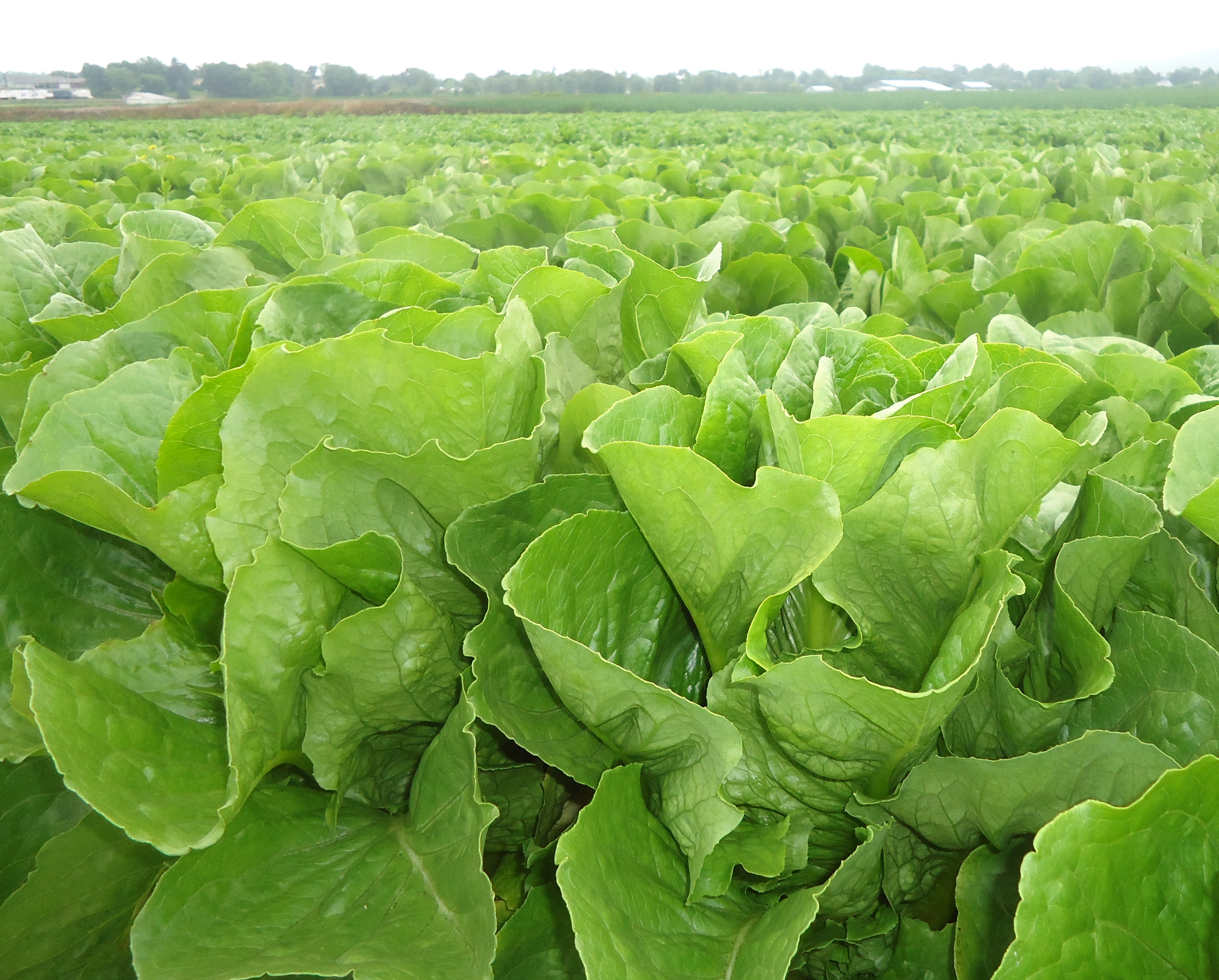 Journeying through the produce department of this rural PA store, shoppers are presented with a variety of fresh, local produce from nearby areas. A. Gurda Produce, a local grower in the Middletown, NY area happily supplied us with their beautiful locally grown lettuces and radishes straight from the farm. Andy Gurda’s crops are grown in what’s known as the “Black Dirt Region” of New York State; the dark, rich soil was created at the end of the Ice Age! Talk about a throwback.
Marshalls Creek is a short drive away from the “Jersey Fresh” produce of the garden state: New Jersey. We featured a variety of Jersey Fresh items for our shoppers to explore: Blueberries grown under the popular “Top Crop” name, basil, green and yellow squash and cucumbers straight from Jersey were all on display in our colorful, freshly-stocked produce department. And to top it all off, we had a special visit from Top Crop’s own blueberry mascot and a member of the Donio farm operation!
Journeying through the produce department of this rural PA store, shoppers are presented with a variety of fresh, local produce from nearby areas. A. Gurda Produce, a local grower in the Middletown, NY area happily supplied us with their beautiful locally grown lettuces and radishes straight from the farm. Andy Gurda’s crops are grown in what’s known as the “Black Dirt Region” of New York State; the dark, rich soil was created at the end of the Ice Age! Talk about a throwback.
Marshalls Creek is a short drive away from the “Jersey Fresh” produce of the garden state: New Jersey. We featured a variety of Jersey Fresh items for our shoppers to explore: Blueberries grown under the popular “Top Crop” name, basil, green and yellow squash and cucumbers straight from Jersey were all on display in our colorful, freshly-stocked produce department. And to top it all off, we had a special visit from Top Crop’s own blueberry mascot and a member of the Donio farm operation! Locally grown produce is something we take a lot of pride in supplying throughout the communities and areas we’re a part of, so we were happy to add Marshalls Creek into the mix. As for the rest of our Chopper Shoppers, the local produce season is coming into full swing, so keep an eye out for locally grown fruits and vegetables in your neighborhood Price Chopper! I’ll be updating you throughout the summer with locally grown happenings, so check back to see what’s growing on near you! Written by Jane N. Golub
Director In-Store Marketing Programs
PRILOSEC OVER THE COUNTER WILDBERRY
Prilosec Over the Counter Wildberry is the same Prilosec Over the Counter tablet, now available with a flavor coating that gives you a burst of berry flavor. Same medicine, same strength, same efficacy – now in Wildberry flavor!
Locally grown produce is something we take a lot of pride in supplying throughout the communities and areas we’re a part of, so we were happy to add Marshalls Creek into the mix. As for the rest of our Chopper Shoppers, the local produce season is coming into full swing, so keep an eye out for locally grown fruits and vegetables in your neighborhood Price Chopper! I’ll be updating you throughout the summer with locally grown happenings, so check back to see what’s growing on near you! Written by Jane N. Golub
Director In-Store Marketing Programs
PRILOSEC OVER THE COUNTER WILDBERRY
Prilosec Over the Counter Wildberry is the same Prilosec Over the Counter tablet, now available with a flavor coating that gives you a burst of berry flavor. Same medicine, same strength, same efficacy – now in Wildberry flavor!  New Prilosec Over the Counter with Wildberry flavor should be taken the same way as the original Prilosec Over the Counter – per the directions on the package. Swallow 1 tablet with a glass of water before eating in th morning every day for 14 days. Swallow whole. Do not chew, crush or suck tablets.
Prilosec Over the Counter and Prilosec Over the Counter with Wildberry flavor are both a 14 day course that may be repeated every 4 months (three courses per year).
Look for Prilosec Over the Counter Wildberry in the Stomach Relief aisle.
READY PAC BISTRO BOWL SALADS
Ready Pac Bistro Bowl Salads – the perfect solution to your busy day! Fewer than 300 calories and developed by our in-house chefs, you can load up your fridge and you’ve got a tasty nutritious lunch solution all week. Bistro Salad varieties include:
New Prilosec Over the Counter with Wildberry flavor should be taken the same way as the original Prilosec Over the Counter – per the directions on the package. Swallow 1 tablet with a glass of water before eating in th morning every day for 14 days. Swallow whole. Do not chew, crush or suck tablets.
Prilosec Over the Counter and Prilosec Over the Counter with Wildberry flavor are both a 14 day course that may be repeated every 4 months (three courses per year).
Look for Prilosec Over the Counter Wildberry in the Stomach Relief aisle.
READY PAC BISTRO BOWL SALADS
Ready Pac Bistro Bowl Salads – the perfect solution to your busy day! Fewer than 300 calories and developed by our in-house chefs, you can load up your fridge and you’ve got a tasty nutritious lunch solution all week. Bistro Salad varieties include:
- Chef: Julienne Smoked Turkey, Ham, Swiss Cheese and Creamy Ranch Dressing on a bed of Iceberg Lettuce. Only 270 calories!
- Chicken Ceasar: A healthier version of your favorite salad! Roasted Chicken Breast, shredded Parmesan-style cheese and Creamy Caesar Dressing on Romaine Lettuce. Only 230 calories!
- Cranberry Walnut: A vegetarian salad with Spring mix topped with Dried Cranberries, Candied Walnut pieces, Feta Cheese crumbles and a Raspberry Vinaigrette dressing. Only 210 calories!
- Italiano: Romaine Lettuce with chunks of Radicchio, Genoa Salami, Julienne Smoked Turkey, Fontina Cheese, Black Olives, Pepperoncini and Champagne Vinaigrette dressing. Only 200 calories!
- Santa Fe Style Caesar: Romaine Lettuce with Chili-Lime Seasoned Chicken Breast, Fire-Roasted Corn, Mexican 4-Cheese Blend, Chili-Lime Seasoned Tortilla Chips and Salsa Ranch Dressing! Only 280 calories!
- Turkey & Bacon Cobb: Smoked Turkey, Bacon Crumbles, Hard-Boiled Eggs and Creamy Bleu Cheese Dressing, Iceberg and Romaine Lettuces. Only 290 calories!
Look for Ready Pac Bistro Bowl Salads in the Produce Department! 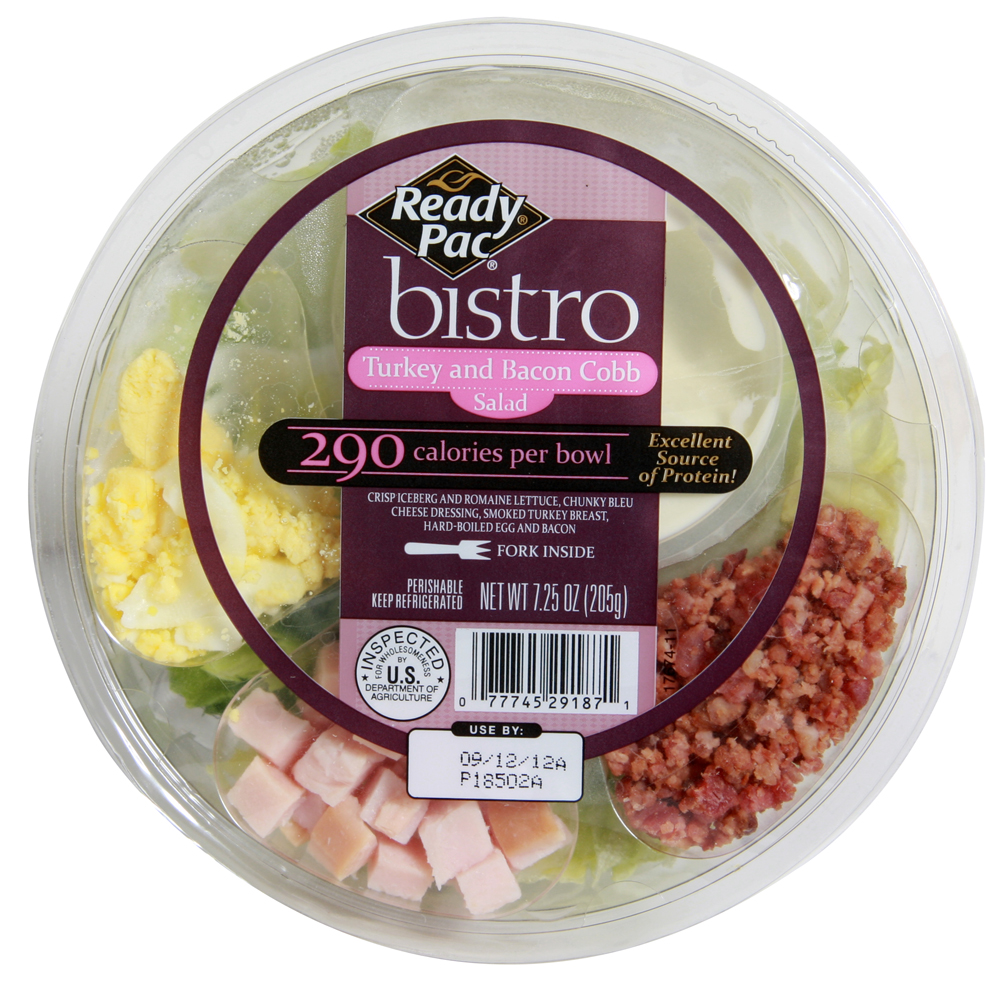
 Written by Tyler BlanceProduce Merchandising Intern
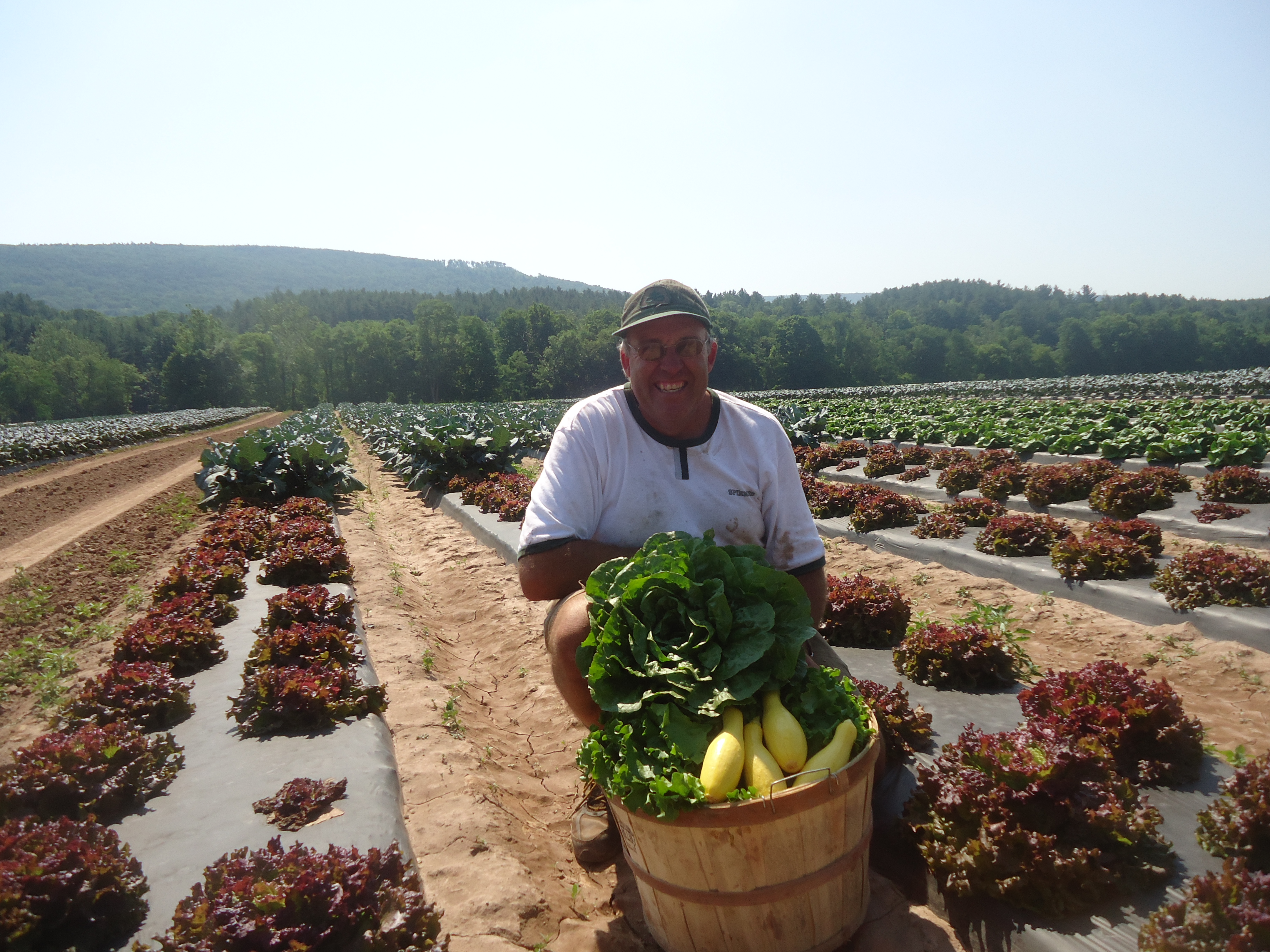
Farmer Dave Shaul with his lettuce and summer squash!
- Shaul Farms in Middleburgh NY
- Davandjer Farms in Pine Island NY
- Paul Mazza Farms in Colchester VT
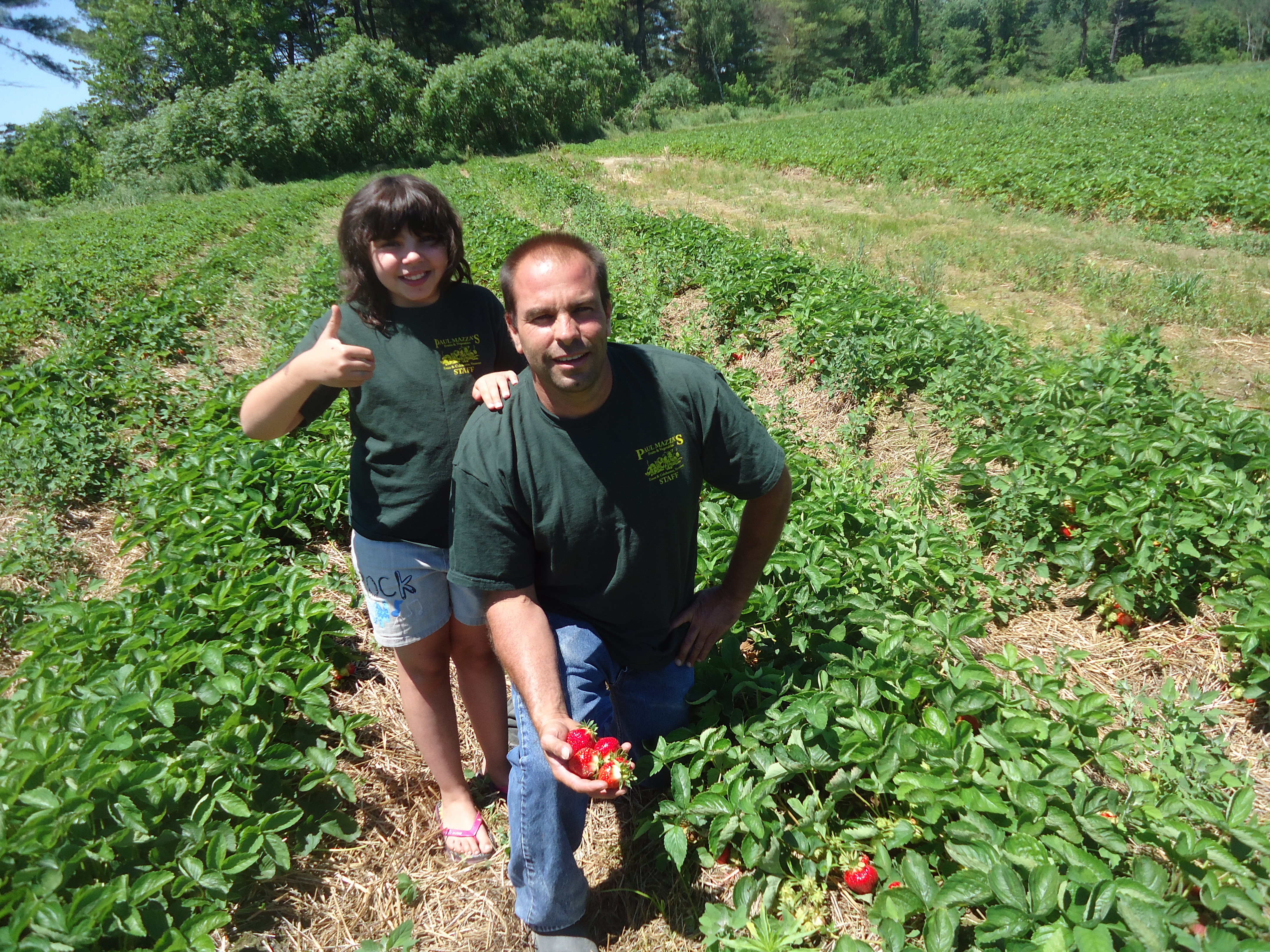
Farmer Paul Mazza and his daughter displaying his juicy strawberries!